Score Counter, built and run solo since 2016
I taught myself Android to replace pen and paper during game nights. The app grew to 1M+ installs and 100K monthly active users without paid marketing, and I brought it to iOS in September 2026.
- 1M+
- installs
- 100K+
- MAU
- 43%
- store conversion
- 4.9★
- rating
Install and monthly active user figures: Google Play Console KPI trends, August 2026.
- Role
- Solo product owner
- Since
- 2016
- Platforms
- Android · iOS
- Scope
- Design · code · releases · support
A personal utility became a product
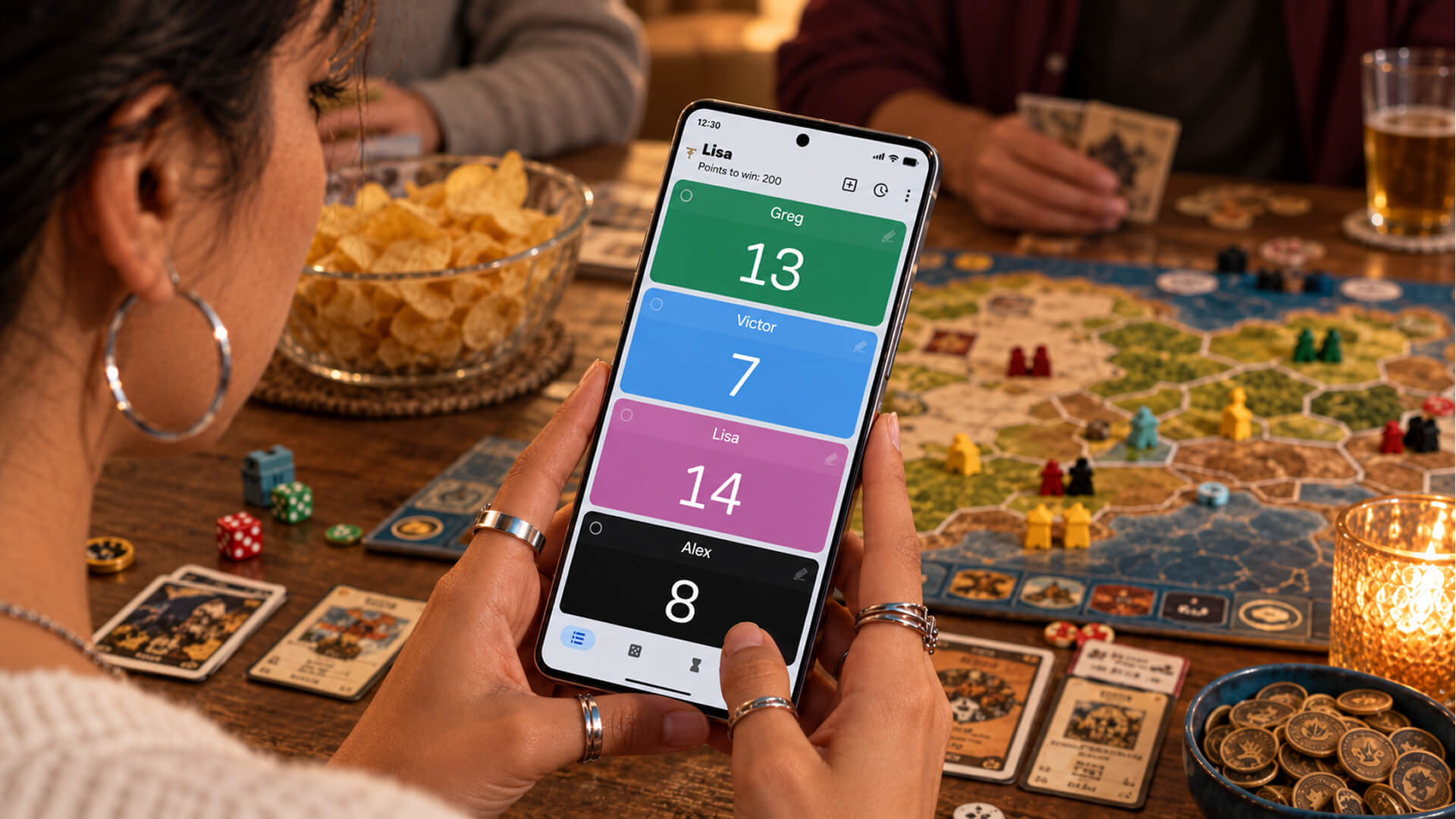
The counter apps I tried were crowded with ads or made a quick score change feel like setup work. I had no Android experience, so I learned enough to design, build, publish, and support the version I wanted to use.
Discovery came through Play search, recommendations, and volunteer translations. Reviews also showed that people were using the app outside board games: sports, household tasks, habits, and any situation that needed a few named counters.
The hard part was deciding what not to add
Every request made sense on its own. The risk was letting all of them crowd the screen until a simple score change felt like work.
Keep counting simple
I kept the counter itself fast. History, graphs, and extra controls stayed out of the way until someone needed them.
Iteration changed the product, not its job
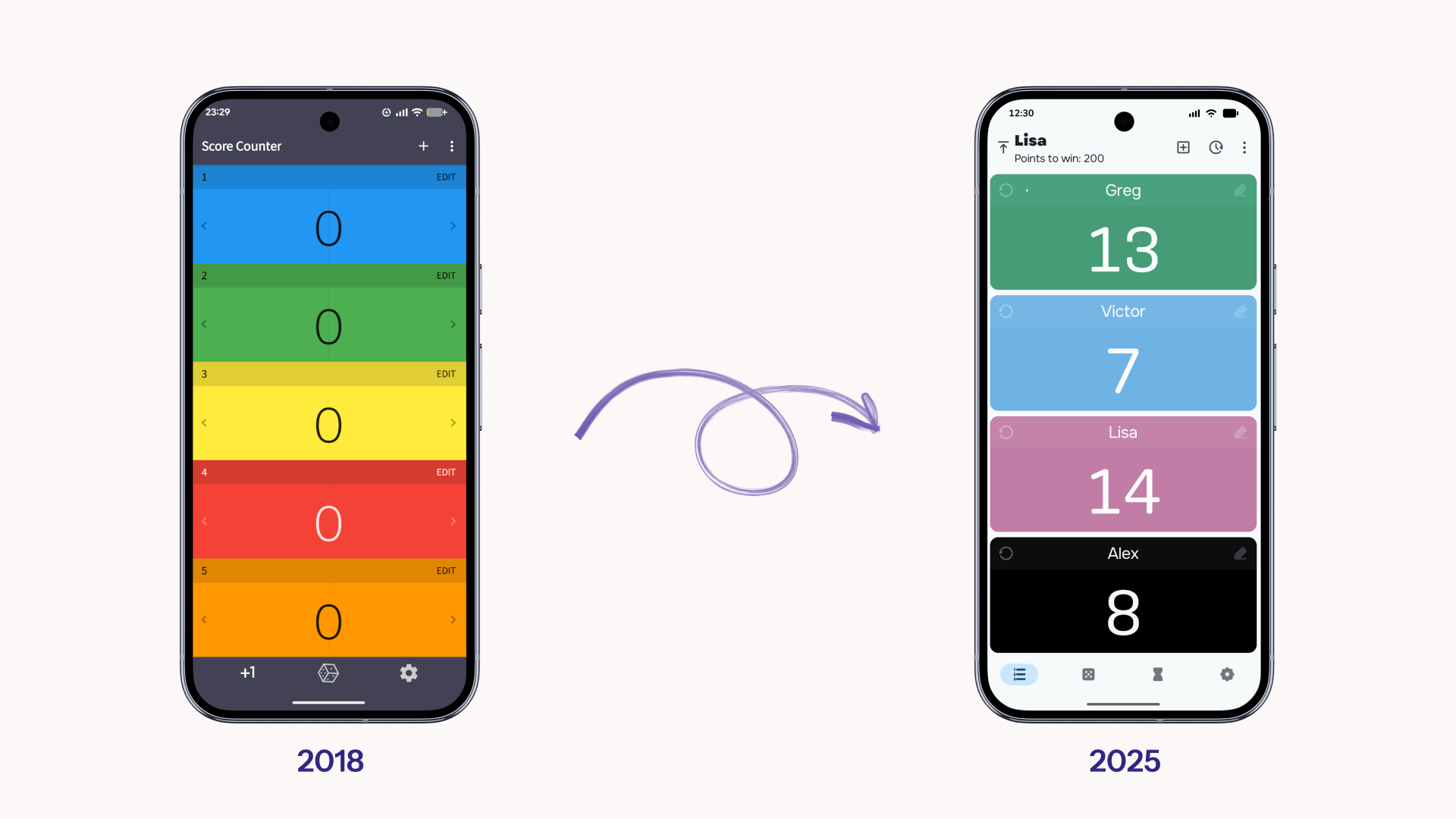
The interface moved from numbered rows and small controls to large, named counter surfaces that are easier to scan across a table. Later releases added history, visual summaries, and more control without turning the app into a tool for one specific game.
I shipped a timer, graph history visualisation, and custom colour picker in 2026. They answered repeated requests, but I did not set up feature-level analytics, so I cannot claim that they changed retention or usage.
2026: add a timer without slowing the score flow
Two Google Play reviews asked for a timer. One reviewer described the small hourglasses included with board games as easy to lose or break and wanted the app to replace them.
I checked popular game-assistant tools and found that timers were common. I shipped the timer on a separate screen so it would not interrupt the main counting flow.
January 2026: add custom colours after user requests
Users asked to choose their own counter colours, and I shipped a custom colour picker in January 2026.
August 2026: add graph history after user requests
Users asked for graph history, and I shipped the feature in August 2026.
September 2026: bring Score Counter to iOS
After ten years of building Score Counter for Android, I released an iOS version in September 2026. Android is still the main product and the source of the results here, but I now design, build, and ship the app on both platforms.
One feedback loop, one owner
Listen
Read Play reviews, answer support, and group repeated requests.
Choose
Check whether a request helps broad counting use without slowing the start path.
Ship
Design, build, test, release, and update the store listing myself.
Watch
Use ratings, adoption, support, and new requests to shape the next release.
Proof from long-term iteration
Score Counter has passed 1M installs, serves 100K monthly active users, and holds a 4.9 Play rating. Paid marketing spend remains zero. On August 24, 2026, it ranked #1 in Google Play for "score counter" in the US/en-US locale.
“Does what it needs to do.”
“Where’s the 6 star button?”
Reflection
Ten years of maintaining one small app taught me that restraint is ongoing work. Every useful feature creates another decision about what belongs on the main screen and what should stay out of the way. I am proud that Score Counter can do much more than it did in 2016 without making the first tap harder.