Designing a self-serve path to the first active eSIM
I worked on moving manual B2B account creation to self-service signup. The flow shipped, but the repository does not contain a measured conversion result.
- Role
- Product designer · sole design owner
- Timeframe
- 2025
- Platform
- Web · B2B SaaS
- Team
- PM · Engineering
Note: images and some details have been modified per agreement with Yesim.
Account creation was moving into the product
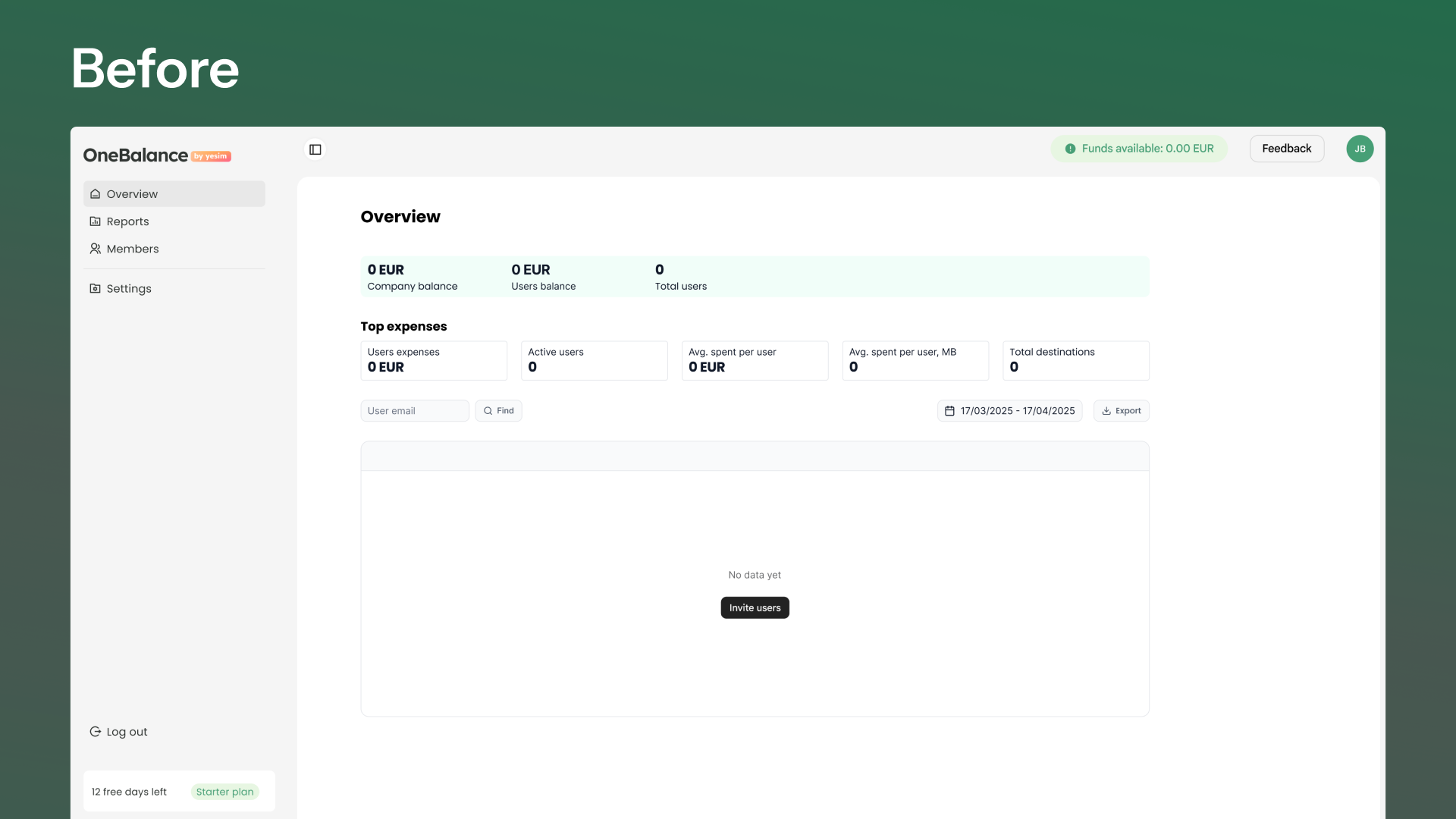
The work started because Yesim was moving from manually created business accounts to self-service signup. The product now had to guide account creation and initial setup instead of relying on the manual process.
A new admin could still reach an empty dashboard with no employee, assigned plan, or explanation of which prerequisite came next. The archived material establishes that interface problem, but it does not show how often people abandoned the flow.
I was the sole designer on the flow. I owned the UX structure, interaction design, and prototype, then coordinated with product and engineering through delivery.
Choose an activation point the interface could explain
The working hypothesis was that setup should not end at account creation. A business admin reaches a meaningful product state when an employee has an eSIM plan assigned and can use it. That became the spine of the shipped onboarding flow.
This was a design criterion, not a measured result. It gave each step a reason to exist and gave the dashboard a clear way to describe incomplete setup.
Decision 1: collect the company context first
Keep compliance information inside the setup sequence
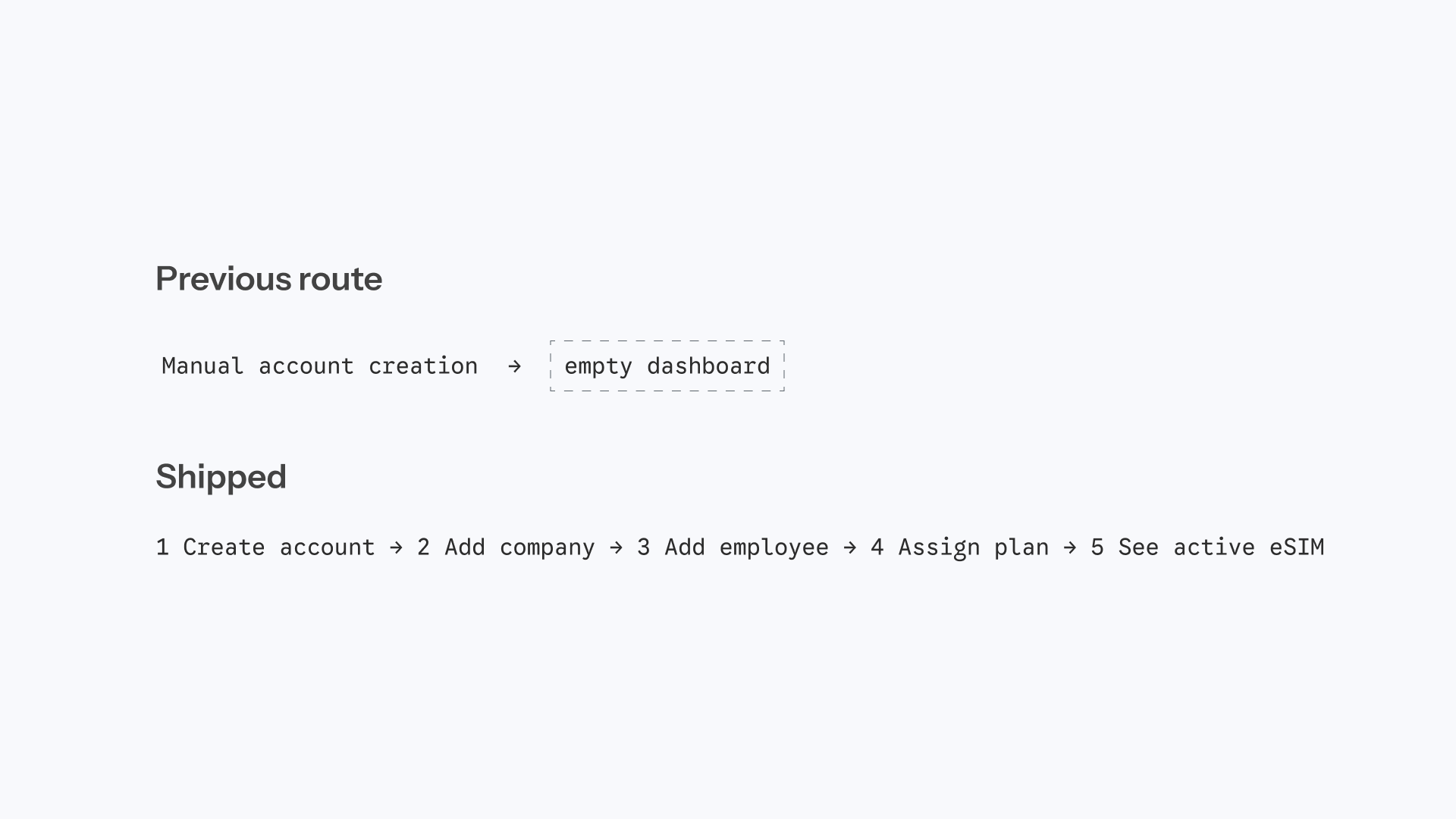
Company details were placed before employee and plan setup because the account needed an identifiable business context. The screen grouped required fields, explained document input, and kept the next action visible.
The shipped flow let admins skip the initial form and return to complete it later. A separate draft-saving state is not confirmed.
Decision 2: let the dashboard continue the flow
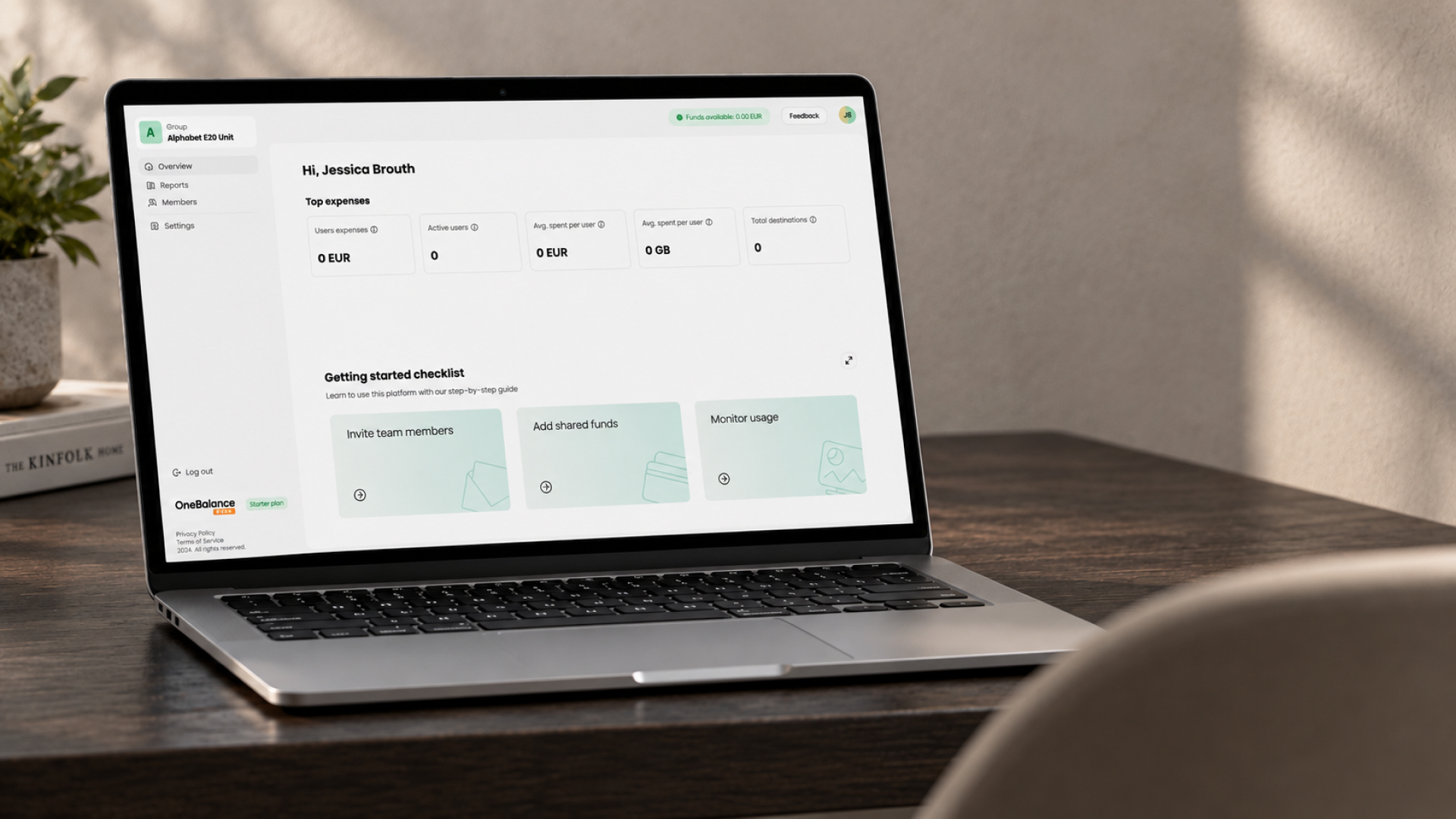
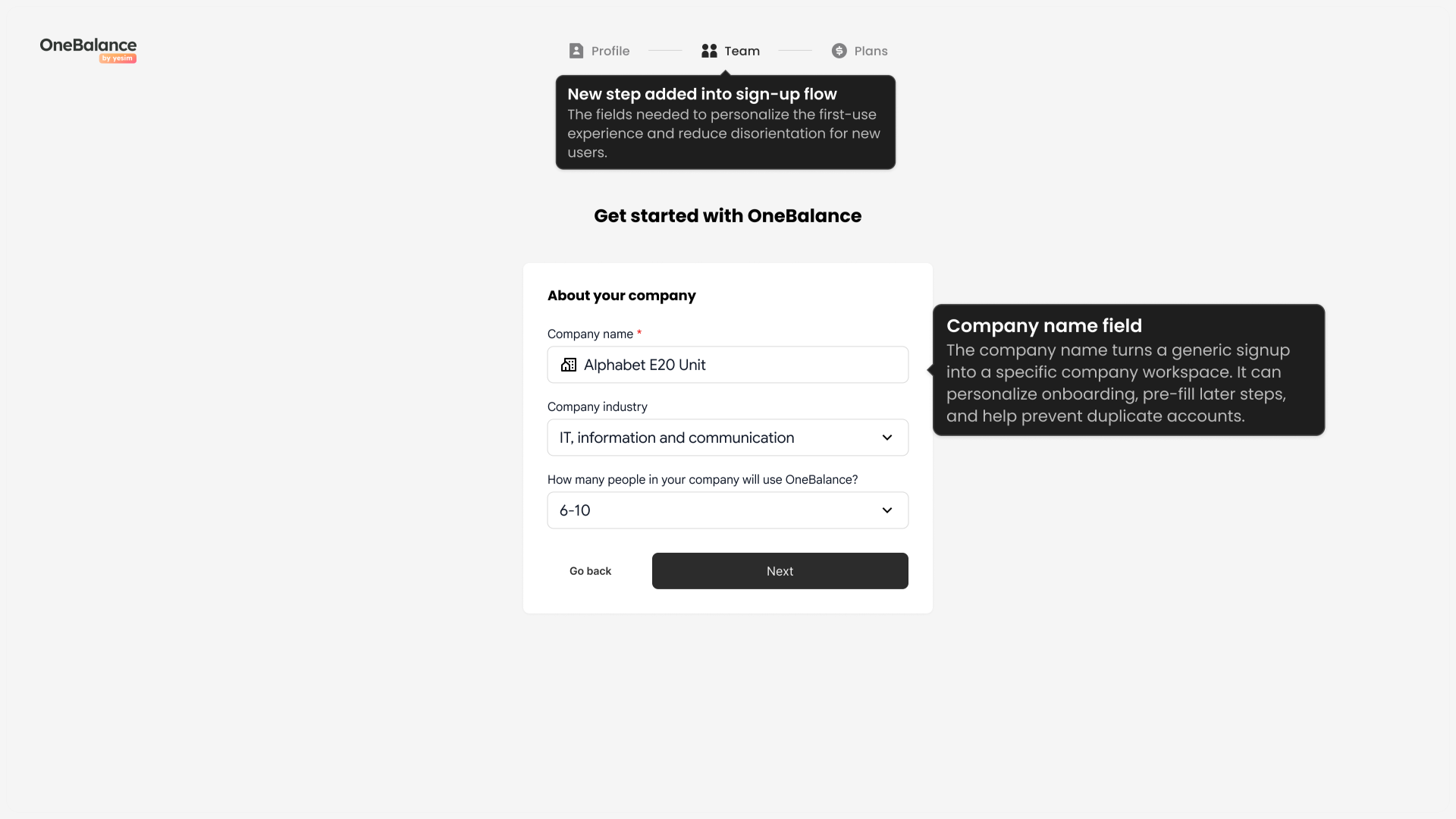
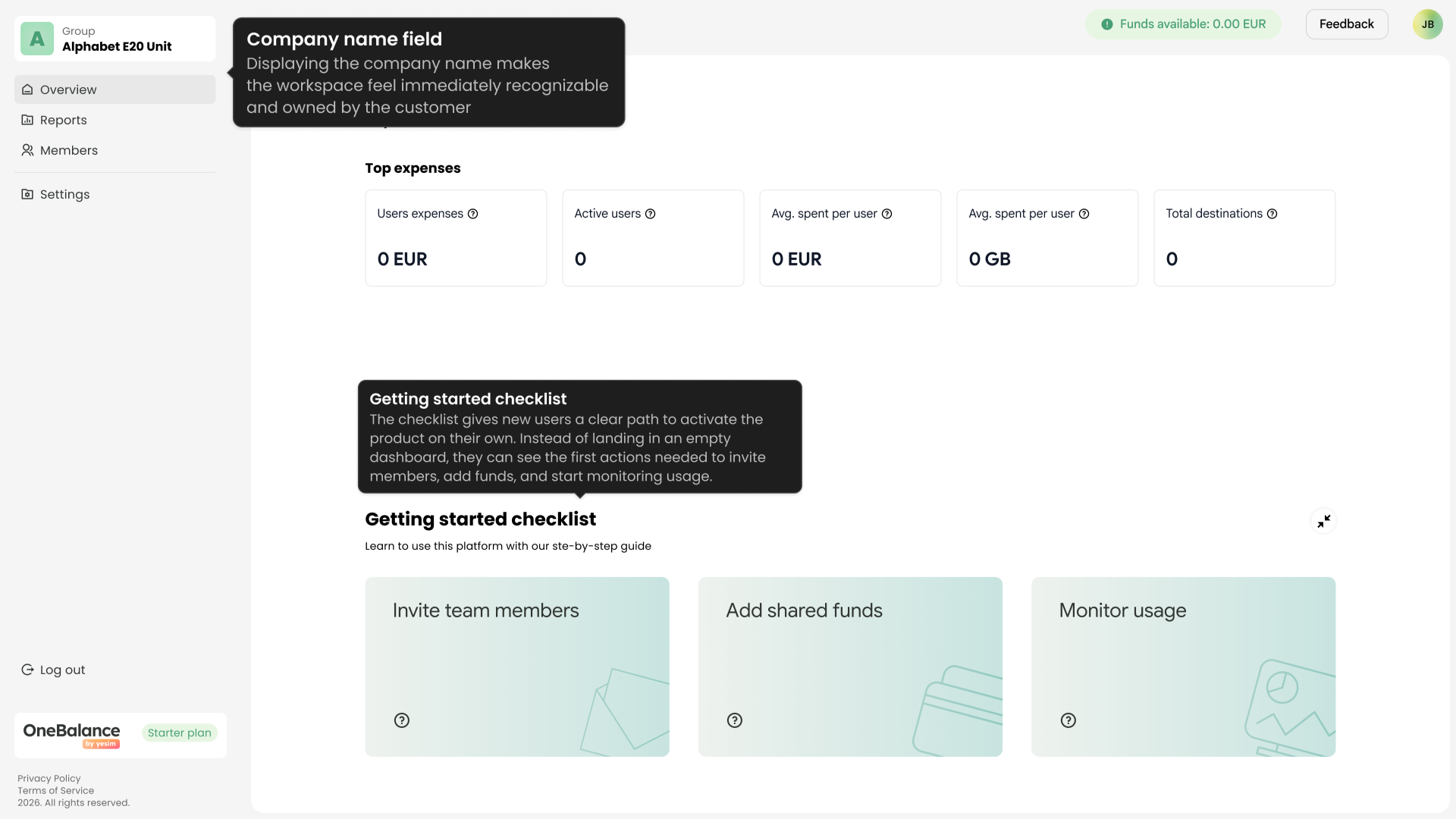
Onboarding continued on the dashboard through a shipped checklist. It kept the account identity visible and showed which task would move the admin toward the first active eSIM.
That approach trades a cleaner empty dashboard for a more explicit one. For a new admin, the extra guidance is useful until the account has an employee and assigned plan; after activation, normal product data can take over.
What would make this a growth case
The shipped flow was not user-tested before or after launch, and there was no formal experiment. That means there was no control, variant, defined cohort, observation window, or primary metric.
Start
New business account enters setup
Company
Required company information is completed
Employee
The first employee is added
Activation
The first eSIM plan is assigned
The primary evaluation would have been the share of eligible accounts that reached an assigned eSIM, supported by the time between steps and reasons for stopping. No post-launch result exists, so this remains a case about the shipped activation model. It cannot demonstrate a lift.
Reflection
I can explain the product logic from the archived material: the flow ends at a usable state and the dashboard explains missing prerequisites. I cannot show whether it moved the funnel. I would instrument the steps and agree on a decision rule before calling the design successful.